
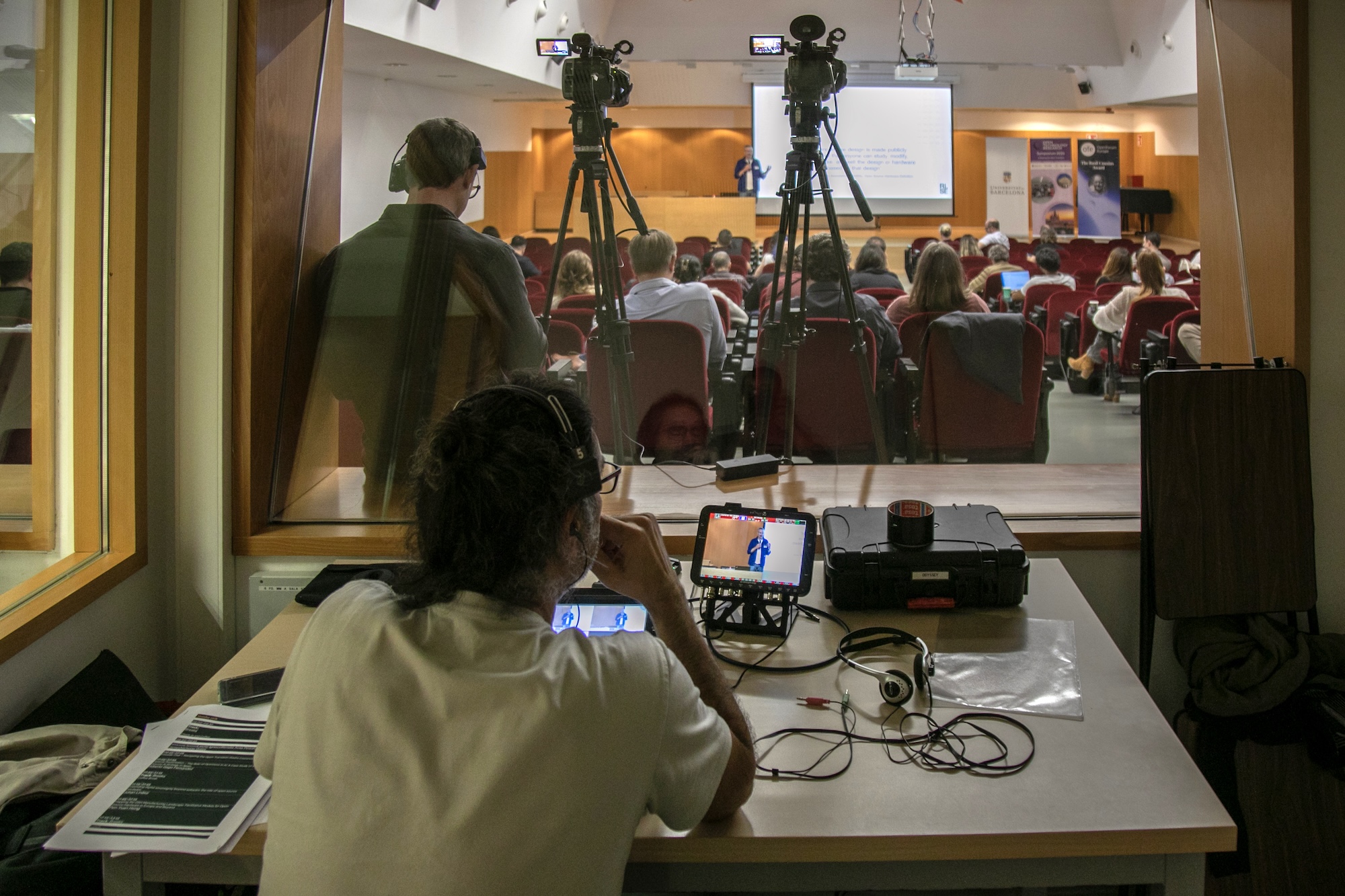
Barcelona Open Tech Week took place from 26 to 30 October in beautiful autumn sunlight right after the devastating flooding across Catalonia and Valencia, and violent disturbances around Plaça de Catalunya following a youth demonstration. The eventful week filled the city with people working on open technologies, digital rights, democratic innovation and public-interest technology and hosted a series of events, including the Open Technology Research Symposium, the Open Technologies Policy Summit, MozFest and the co-located Decidim Fest, the 4D Conference, and the People’s Assembly for Open Technology.
The Open Technology Research Symposium
The Open Technology Research (OTR) Symposium connects research, community and policy in an effort to strengthen the open technology research field and support evidence-based policymaking. Its 2026 theme, Shaping the Open Transition, focused on moving from diagnosis to action, positioning open technology as a shared foundation for resilience, digital sovereignty and public-interest governance.
I came to the symposium with a particular interest in exploring how these discussions on digital sovereignty connect with community heritage sovereignty: the rights and capacities of communities to govern their own knowledge, cultural heritage and the infrastructures through which these are shared, preserved and used. I ended up being drawn to the wide spectrum of issues in technology that can enable equal participation in society.
Download the annotated program
Technology is ours
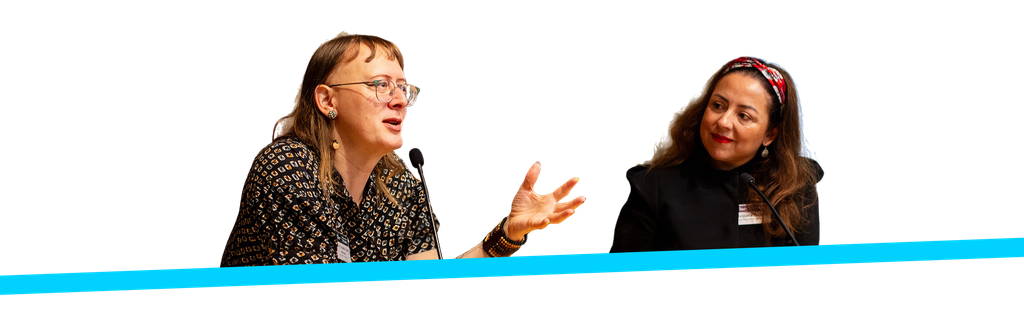
The opening set the tone. Renata Ávila spoke about technology in terms that were much more fundamental than software policy. Technology is ours, she argued, and some of its faults cannot simply be fixed: they have to be replaced.
The fireside chat with Sasha Costanza-Chock made a strong case for returning agency over technology to the people. This means not only opening up the technology itself, but also changing who governs it and who gets to make decisions about how it is developed and used.
From democracy to peace tech
Decidim was a unifying thread throughout the Open Tech Week. Originating in Barcelona, the open-source participatory democracy platform has more than 450 implementations in 30 countries and is recognised as a Digital Public Good. In Finland, it powers Helsinki’s OmaStadi participatory budgeting process. The Decidim community has also been active in international policy discussions, including the UN Open Source Week in New York in June.
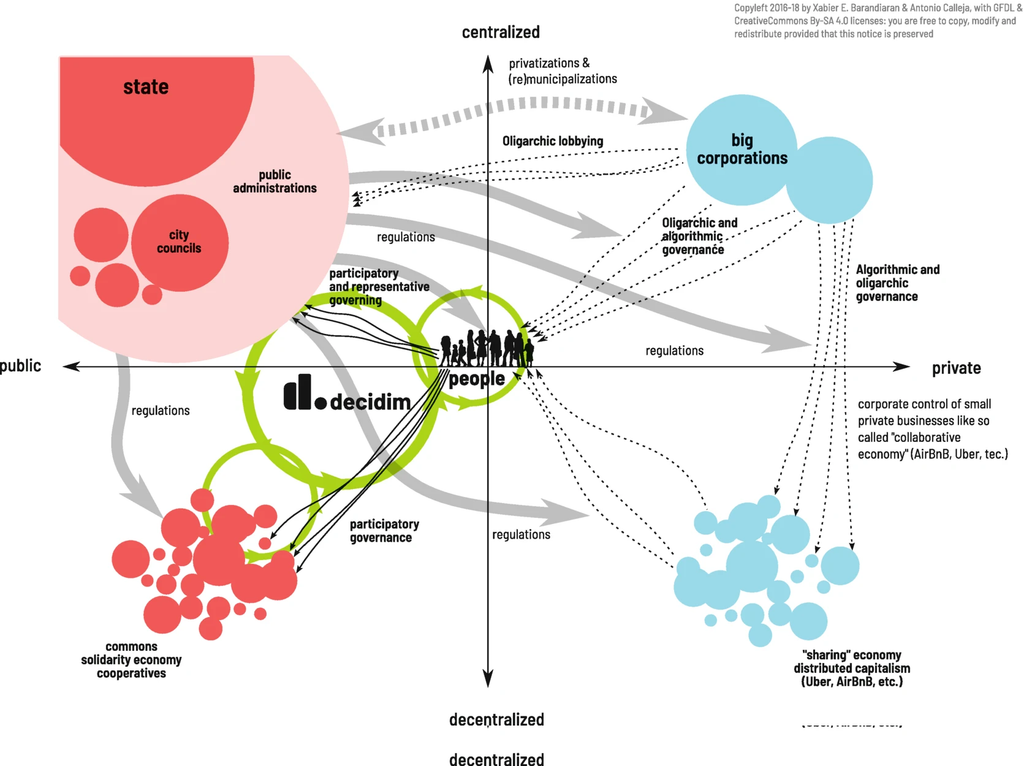
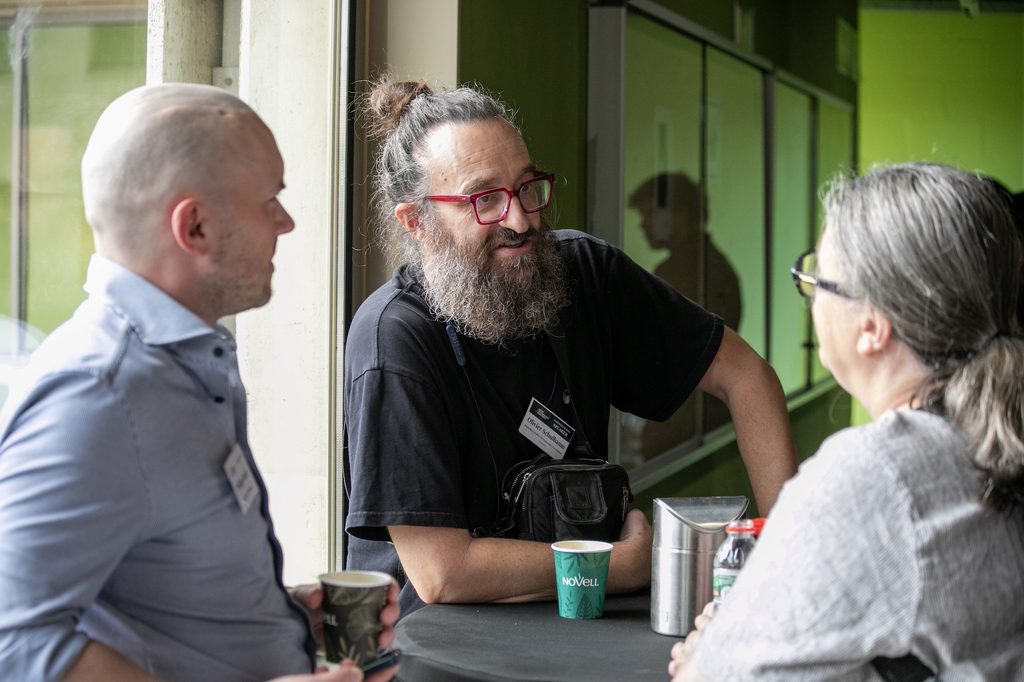
Olivier Schulbaum, co-founder of Platoniq, one of the organisations developing Decidim, introduced the concept of Political User Experience (PUX). He argued that participation platforms should be judged not just by their usability or the number of contributions they attract, but by how their design shapes who gets to speak, what knowledge counts and how people can influence and challenge institutional decisions. He called this democratic choreography: the relationships and interactions through which civic expression meets public authority.
I explored these ideas further in Olivier’s participatory workshop Legislative Tech Theater: Testing the Technology We Need at MozFest, which drew on Augusto Boal‘s Legislative Theater. It took me back to Rio de Janeiro in 2001, when I took part in Boal’s rehearsals, playing an oppressor shouting orders at Brazilian workers in Finnish, while banging on a huge double-headed drum. There was an interesting twist: Boal himself was opposed to applying his methods to service design. His work was about rehearsing social and political transformation, not having the methods appropriated in possibly controversial ways.
I realised that digital methods for democratic processes share something with peace technology. OKFN’s recent The PeaceTech We Want event raised similar questions about how technology can support dialogue and help people work through conflict. The contexts are very different, but both are concerned with helping people with different interests and perspectives find ways forward.
Global policy
I made a quick visit to the concurrent Open Technologies Policy Summit to follow the panel discussion. The panel discussion gave a 360 degrees to policy-making around digital technologies. Presented were the UN Office of Digital and Emerging Technologies, EC OSPO, Digital Commons EDIC, Sovereign Tech Agency, and RISE Research Institutes of Sweden
Omar Mohsine, Open Source Coordinator at the United Nations Office of Digital and Emerging Technologies, gave a particularly encouraging account of the UN’s commitment to open source. He highlighted the UN Open Source Principles, UN’s open-source software catalogue and the work to build a common approach to open source across the UN system. As he put it, I cannot think of another way to say ‘everybody’ other than open source.
He also introduced the idea of lock-out alongside the more familiar problem of lock-in. The experience of the International Criminal Court was described as a lightbulb moment for the UN: society cannot be dependent on proprietary technology when access to essential digital services can be withdrawn. Open source therefore becomes not only a question of access or reuse, but of institutional resilience and the ability to remain operational.
The UN Open Source Enablement Compass (OSEC) is a new UN-led initiative stemming from this idea, developed in collaboration with RISE Research Institutes of Sweden. It is a practical framework to help governments assess and strengthen their capacity to adopt, govern, contribute to and sustain open-source software. The project is led at RISE by Johan Linåker, a researcher specializing in open technologies and digital sovereignty.
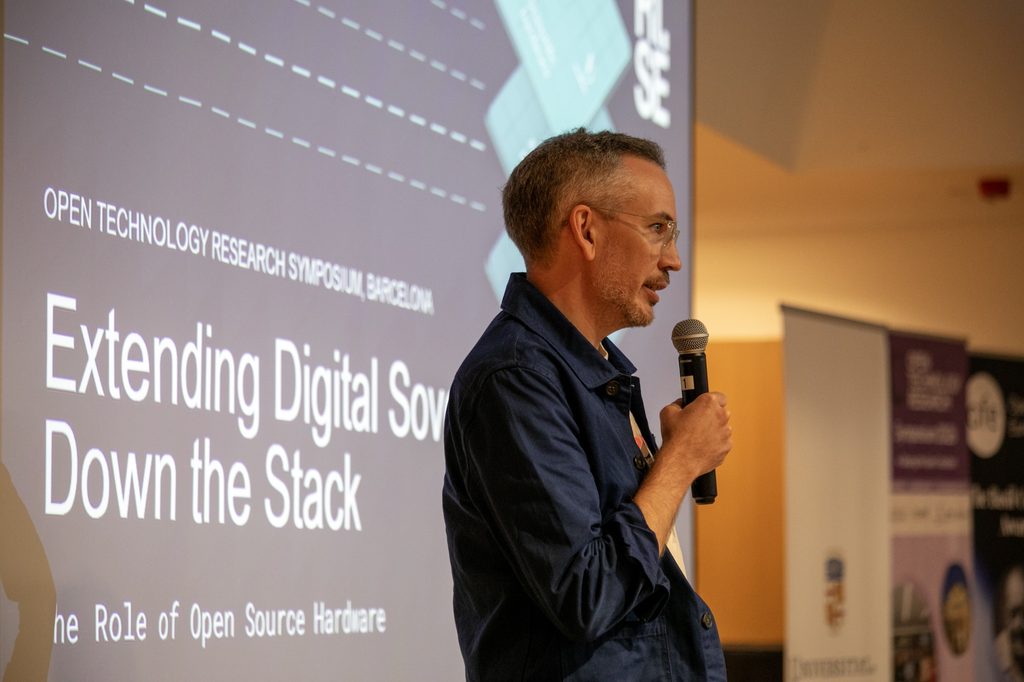
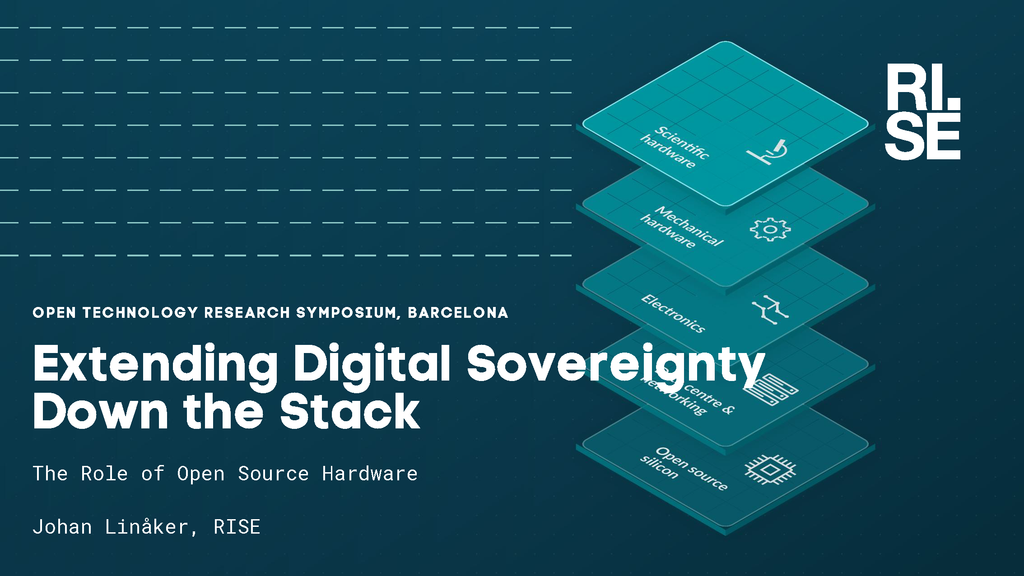
In his presentation back at OTR, Johan highlighted another blind spot in the sovereignty debate: the hardware layer. While Europe’s sovereignty agenda has focused on software, data and platforms, control over digital infrastructure ultimately depends on the hardware underneath. Linåker argued that sovereignty must extend across the entire technology stack, including the design, production and governance of hardware. Open Source Hardware, built on shared designs, open standards and collaborative development, offers a way to reduce dependencies and build more resilient infrastructure.
Heritage at Risk
I would like to highlight three more talks in the OTR program as they resonated with our activities at Open Knowledge Finland and AvoinGLAM.
Software Heritage
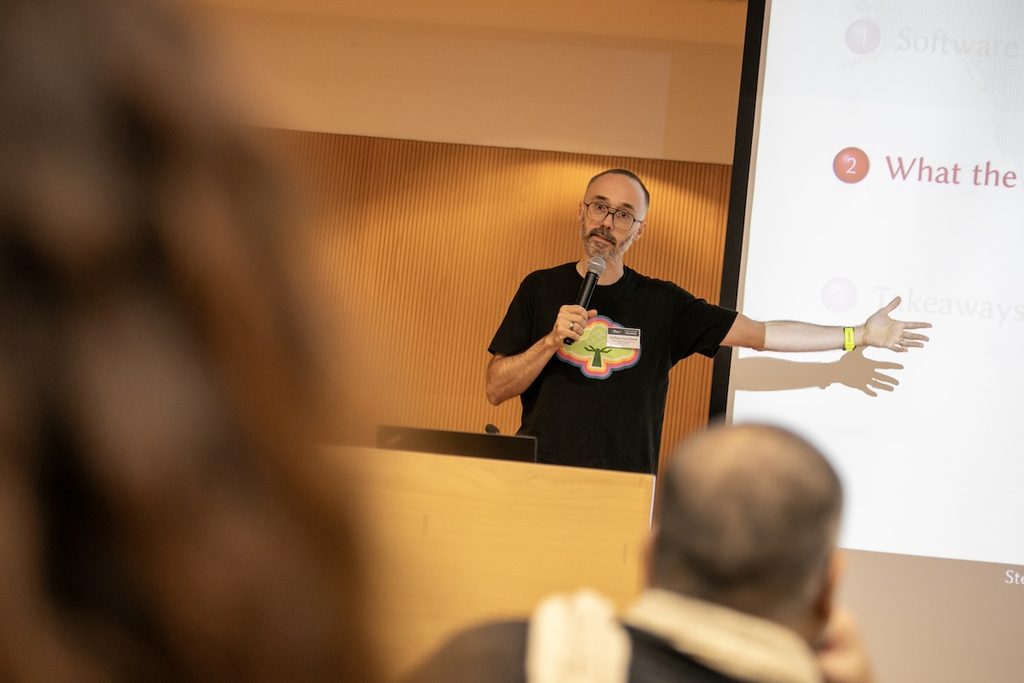

Stefano Zacchiroli’s keynote looked at what we can learn from Software Heritage about keeping open technology alive over time. Software Heritage has built the world’s largest archive of publicly available software source code and its development history. Launched by Inria in partnership with UNESCO, it aims to preserve and share the knowledge contained in software. The initiative shows that software is also part of our documentary and cultural heritage, and raises the question of how we can preserve the digital infrastructure that society depends on as a shared resource.
For AvoinGLAM, the connection is particularly interesting: it brings together questions of heritage preservation, open access, provenance and long-term stewardship, extending familiar GLAM concerns into the infrastructure that makes digital culture and knowledge possible. It also resonates with our discussions at Oulu Löyly about cultural heritage as critical infrastructure and the need to consider continuity, resilience and community capacity when the systems supporting it are disrupted.
From volunteers to civic contributors
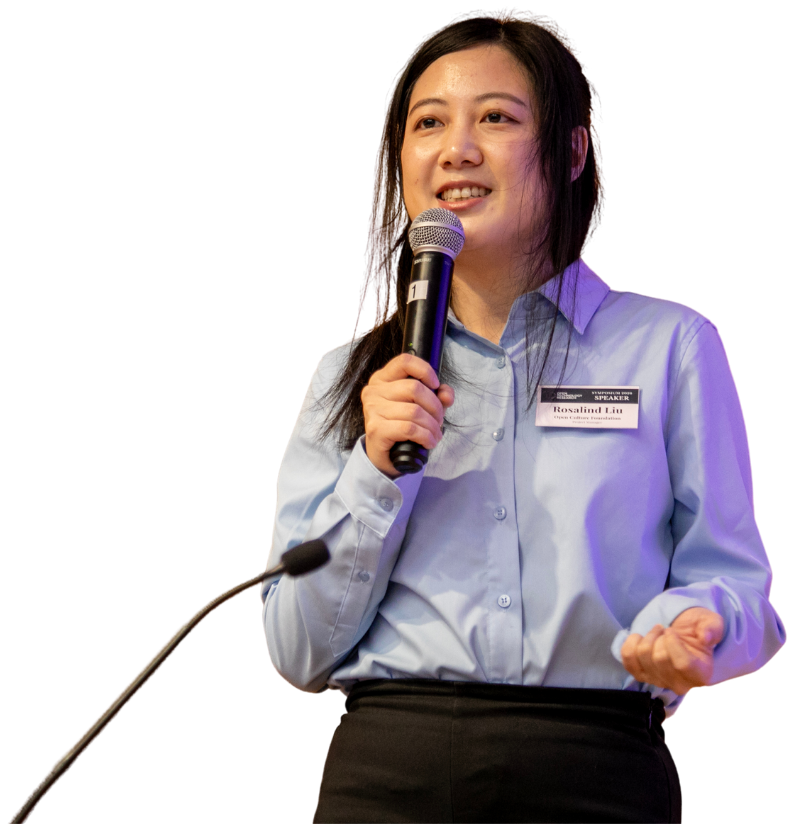
Rosalind Liu from Open Culture Foundation showed what volunteer technology communities can do when disaster strikes in Taiwan. After Typhoon Danas in 2025, a volunteer built an online map to track asbestos waste overnight, helping address a problem that government systems had not been able to handle. Later that year, when a landslide dam overflowed near Guangfu, volunteer-built platforms helped coordinate supplies and people on the ground. More than 500,000 volunteer visits followed, but information was still getting stuck between government agencies.
The question is how to make this kind of civic contribution sustainable, rather than relying on unpaid volunteers to step in whenever a crisis occurs. Rosalind presented three proposals: a pool of trained volunteers who would receive compensation and insurance, technical volunteers working alongside emergency management teams, and a shared library of reusable, security-checked software components.
Rosalind Liu is a long-standing member of the g0v community, she played a key role in bringing open-source thinking into Taiwanese government administration, including architecting Taiwan’s Public Code policy and Digital Innovation Critical Infrastructure Plan while working at the Ministry of Digital Affairs.
Vulnerable organizations
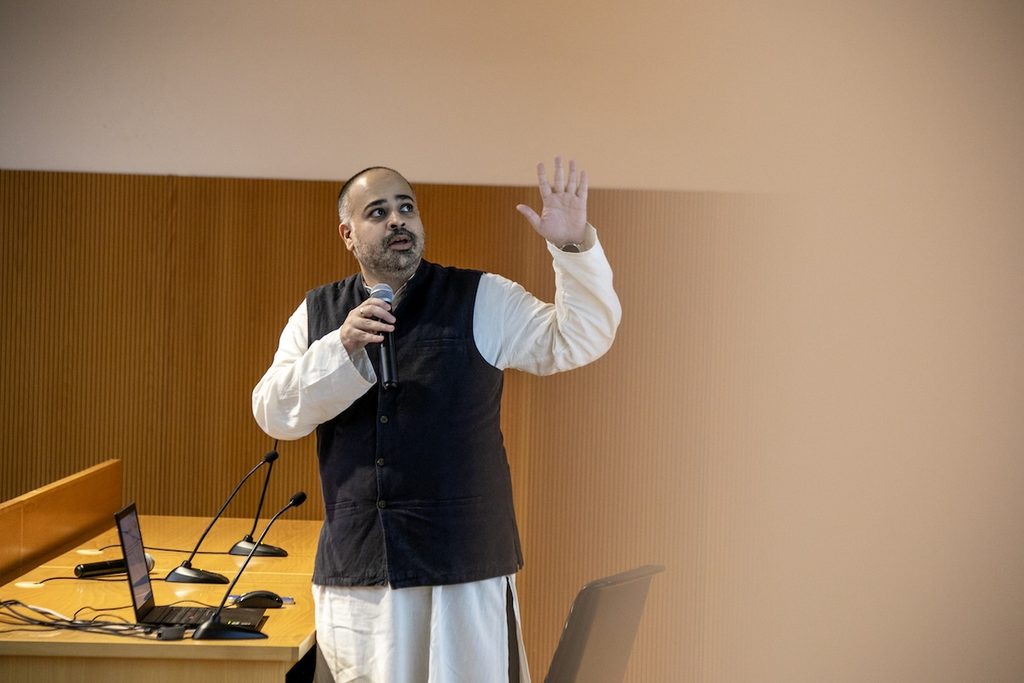
Pranesh Prakash presented the Openness Dynamics Framework, developed through the seven-country Data for Democracy – Asia study. It examines how data governance is shaped by both measures that promote openness, such as open data, open standards and access to information, and restrictions such as data protection, copyright and surveillance. The study found an imbalance: governments often promote openness through policies that are difficult to enforce, while restrictions are backed by enforceable laws.
Pranesh co-founded the Centre for Internet and Society (CIS) in India and was a founding member of its Access to Knowledge (A2K) programme, which worked with global open knowledge communities, including the Wikimedia movement. Its activities were suspended in March 2025 following regulatory difficulties.
There’s more…
This was only a small part of Barcelona Open Tech Week. The Mozilla Festival gathered people from around the world working at the intersection of technology, society, culture and democracy, and that deserves a story of it’s own!
Photos by The Open Technology Research Symposium
Logos and presentations by their respective creators